How to Stop Being Indecisive: Just Pick Up the Candle!
How to stop being indecisive starts with 1 word. "Trying" gives you an out and keeps you from failure's data. Pick up the candle instead!
"I'm trying to post more consistently."
You've said it. Maybe to a friend over coffee, maybe to yourself on a Monday morning with your laptop open and your calendar already full. And right behind it come its cousins: I'm trying to get more clients, I'm trying to stay grounded, I'm trying to figure out what I'm supposed to be doing next!
One day you feel sure, like yes, this is definitely right. The next day none of it makes any sense, and you're battling with yourself on all fronts, all the time, about everything. It feels wishy-washy because it IS wishy-washy (and if you overthink everything, it's exhausting on top of it).
How to stop being indecisive starts with 1 word: trying. "Trying" gives you an out and an excuse before you've even begun, and it robs you of the thing that would actually help you decide, which is the data you get when something doesn't work. Swap "I'm trying" for "I am" and your decisions get a direction.
Try to pick up the candle. Go ahead.
You can pick up the candle, or you can leave it on the table, and those are the only 2 options there are.
Picture a candle sitting on a table in front of you. I ask you to try to pick it up. What do you do?
You pick it up! Every single time, that's what people do, because the instant you act, you've stopped trying and started doing. My ex-husband ruined Star Wars for me, so it pains me to say this... but Yoda was right. "There is no try."
And the question I always get next is a good one: what if the candle is heavy, or it's stuck to the table? Then you reached for it and it didn't come up. You didn't pick up the candle. That's a real result with real information in it, which is a whole lot more than you get from 6 months of trying.
Not picking up the candle is data. It doesn't mean you're weak, it doesn't mean you're bad or wrong, and it doesn't mean you did something wrong. It's just data. It isn't a judgment, a verdict, or a black mark against you. It's just data!
Your business works the same way: you post this week or you don't, you make the call to the prospect or you don't, and both outcomes tell you something, and both are more useful than "trying."
Why "I'm trying" gives you an out
"I'm trying" sounds responsible, and it hands you an excuse in advance.
It makes perfect logical sense, everybody understands what you mean when you say it, and it builds a soft landing before you've even jumped.
Psychologists have a name for building that soft landing. Steven Berglas and Edward Jones called it "self-handicapping" in their 1978 research, which they defined as any action or choice that makes it easier to excuse failure. "I was trying, and it didn't work out" is a self-handicap you can say out loud. Something not working out and you failing are 2 very different feelings, and "I tried and it didn't work out" softens the blow, takes the responsibility off you, and hands you the excuse.
Talking this way is normal human behavior, and it's also really frustrating to live inside, because the out you built to protect yourself is the same out that keeps the decision from ever getting made. Your brain sees the escape hatch and leaves it open. Your RAS (reticular activating system, the filter in your brain that decides what gets your attention) has noticed the escape hatch too, and it knows there's comfort there. It knows there's safety in using it, so even when it looks like you're trying, your brain defaults to the escape hatch every time, because the safety there is known.
The words you choose are setting the tentions. Your attention and your intention both follow your language, and "trying" points both of them at the easiest exit.
You need to fail at things (yes, really)
Trying keeps you from failing, and failing is how you get the data you need to make your next decision.
When you say "I'm trying to post more consistently" and then you don't, nothing happened. There's nothing to look at, nothing to learn from, and nothing to adjust.
When you say "I'm posting every Tuesday" and Tuesday comes and goes without a post, now you have something. Maybe Tuesdays are your heaviest client day, maybe you hate the platform, or maybe the posts take 3 hours each because you're rewriting them 4 times. That's data, and data tells you why a decision didn't work for you. It can inform every decision you make after it, as long as you look at it. The data is there either way, and you have to actually look at it to use it.
Sometimes that data carries a lesson with it, the kind you only learn by walking through something hard. And sometimes it's just data! Either way it's useful, and you only get it by actually doing the thing.
Failing is part of both personal and professional development, and "trying" opts you out of both without you ever noticing. (Sneaky little word, right?!)
How to stop being indecisive: say "I am" and mean it
Being focused means picking a direction out loud, then doing whatever you can think of to carry it out.
"I am posting every Tuesday at 10am." "I am calling 3 past clients this week." "I am grounding before every sales call." Every one of those sentences has a direction, and every one of them can succeed or fail, which is exactly why they work.
This one has science behind it too. Peter Gollwitzer and Paschal Sheeran looked at 94 studies on what they call implementation intentions (a plan that names exactly when, where, and how you'll act) and found a medium-to-large effect on people following through, in their 2006 meta-analysis. A specific "I am" gives your brain something to follow through on, and a vague "I'm trying" gives it nothing.
Your brain will probably push back the minute you change the sentence. That's normal too, and why your brain tests every new decision is worth understanding before it catches you off guard.
And make the sentence small enough to say with a straight face. "I am building a business that pays for the life I want" is a determination. "I am sending 1 email today" is a direction you can carry out before lunch. You need both, and only one of them gets you moving this afternoon.
What changes when the decision has a direction
Once you say "I am," every result becomes useful, and the battle with yourself gets quieter.
You stop relitigating the same choice every morning, because you already made it. You either did the thing or you didn't, and you get to look at what happened with curiosity.
That's the shift from wishy-washy to focused. One day feels right, the next day doesn't, and the decision stays made anyway, because it's grounded in what you're doing.
You can even practice the "I am" before you live it. Mental rehearsal works on the same brain that has to follow through, so picture yourself picking up the candle, then go pick it up.
And when your nervous system is the thing making every choice feel impossible, start there. My 2am guide to nervous system dysregulation is a good first stop.
FAQs: How to Stop Being Indecisive
Why do I say "I'm trying" so much?
"I'm trying" feels safe because it gives you an excuse before you start. It sounds responsible and everyone understands it, so it slips into how you talk without you noticing. Catching yourself saying it is the first step, then swap in "I am" and name exactly what you're doing.
How do I stop overthinking every business decision?
Give the decision a direction. Say what you're doing in an "I am" sentence, make it small enough to do this week, and then do it. The result, good or bad, gives you real data, and data ends the overthinking faster than another round of pros and cons.
What if I say "I am" and then fail?
Then you've got data you didn't have before. Failing tells you why a decision didn't work for you, and it can inform your next decision as long as you look at it. Sometimes there's a lesson in it and sometimes it's just information. Either way it's more useful than "trying," which leaves you with nothing to look at.
Is trying really that different from doing?
Yes! You can pick up a candle or leave it on the table, and the moment you act, you're doing. "Trying" is the hover in between, where nothing moves and nothing gets learned. Doing gives you a result you can learn from, and trying hands you an excuse that keeps the decision open.
Ready to stop trying?
You know what you want to build. What you need is a plan that works for the way YOU work, so every "I am" has somewhere to go.
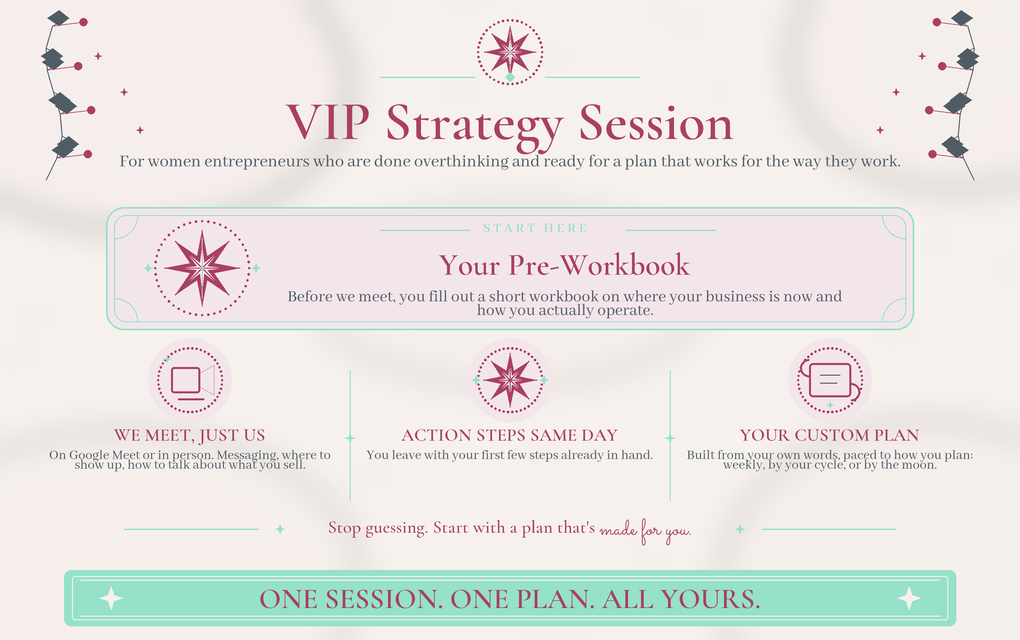
That's what the VIP Strategy Session is for: 4 hours together on fundamentals, messaging, offers, decision making, and client attraction, wherever it needs to go. You walk away with a custom 90-day plan built for how you work.
Are you ready to pick up the candle? Book your VIP Strategy Session.
Just pick up the candle already!
